NOT YET BOOKABLE
Why Sark?
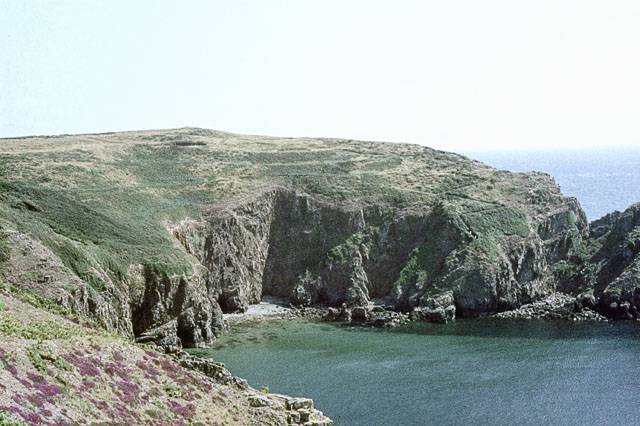
Sark is reached only by sea. There are no private cars, no public street lighting and, after dark, very little between you and the night sky.
The old paths are still walked. The tides still determine when you can get somewhere. The moon changes how much you can see at night. Weather matters.
It is a place that makes you pay attention.
Sark also carries another history.
In the seventeenth century, people on Little Sark were accused of witchcraft. They were imprisoned, banished and, in one case, sentenced to torture and death.
They did not choose the word witch. It was used against them.
Four hundred years later, that same word can mean something very different.
For some women it means ritual or spellcraft. For others, tarot, the moon, the seasons or trusting an intuition they might once have dismissed. For some it is political. For some it is spiritual. And for others it is simply a useful way of making space for intention, attention and the parts of themselves that ordinary life leaves very little room for.
That is the idea we want to explore here.
What might a few days look like?
Nothing below exists yet. We are deciding whether it should.
A small group of women comes to Sark.
There might be tarot or divination. Simple ritual and spellcraft. Candles made by hand. Movement and meditation. Walks through the woods and along the coast. Stories from Sark’s folklore and its witch trials.
There might be a fire after dark, or a gathering beneath a sky with no streetlights.
There would be shared meals and time alone.
And there would be room for the less tangible things: intuition, anger, voice, reflection, friendship, intention, whatever each woman brings with her.
No one would be asked to believe the same thing.
The point would not be to tell you what a witch is.
Who would come?
Perhaps you already use the word witch about yourself.
Perhaps you never would.
You might read tarot, follow the seasons or practise ritual. You might be interested in folk magic, paganism or women’s history. You might simply want to spend a few days outdoors, away from ordinary routines, with other women asking some of the same questions.
You could believe in magic.
You could believe that ritual changes nothing outside us but can change something inside us.
You could be undecided.
There is no belief test.
The history matters
In 1627, Rachel Alexandre of La Sablonnerie on Little Sark was convicted of sorcery and sentenced to death. Years earlier, her husband Jean Nicole had been whipped, mutilated and banished, though the court’s own sentence recorded that it had not found him guilty of sorcery: it punished him instead for breaking out of the Guernsey prison holding him, together with another prisoner.
Rachel’s sister Judith Alexandre and Job Nicole were banished on the day Rachel was sentenced. Nothing in the surviving record establishes that any of them practised what we would now call witchcraft. The word was imposed upon them by a legal and religious system with the power to make the accusation deadly, and that history cannot simply be turned into the backstory for a modern retreat. It is a different history, and we would treat it as one.
Sark’s Witch Trials tells their case separately: what happened, what survives in the records and where those records disagree.
So what are we actually asking?
Take away the pointed hats and the question becomes more interesting.
Could a few days built around attention, intention, ritual, nature and female autonomy mean something here?
Could we follow the moon rather than the clock for an evening? Make something by hand. Walk outside without needing to get anywhere. Try tarot or ritual without being told what we have to believe about it. Sit around a fire. Learn what happened to the people once called witches here. Eat together. Spend time alone.
And perhaps ask what the word means when, four hundred years after it could be imposed on a woman by people with authority over her, a woman can choose it for herself.
That is the thread running through everything we have written about this. The witch has moved from an identity other people imposed to one a woman claims on her own terms. Not spells, and not pretending to be seventeenth century witches, but agency: deciding for yourself what matters, where you put your attention, and what you are called.
WITCH: Woman in Total Command of Herself? follows that shift from accusation to identity. What Witchcraft on Sark Would Look Like works out what the practice actually consists of once the broomsticks are set aside: attention, intention, ritual, nature, agency, belonging, time.
We have the island.
We have the history.
We have some ideas.
What we don’t know yet is whether they make something worth travelling to Sark for.
WOULD YOU SERIOUSLY CONSIDER COMING?
Leave your email and we'll tell you if this idea moves forward. This is not a booking and it does not add you to the 2027 retreat waitlist.
