
All Journal stories Norman Sark
The Sark JournalThe island that still speaks its own language
A Bonaparte prince, eight hours of tape, and a song about a husband thrown off a cliff
Enjoying the Sark Journal? Get new Sark stories by email.
Sark has its own language. It has answered to several names, Sertchais, Sercquiaise, “Sark patois”, or simply Sarkese, and it is a form of Norman French, the island’s own.
The prince and the fishermen
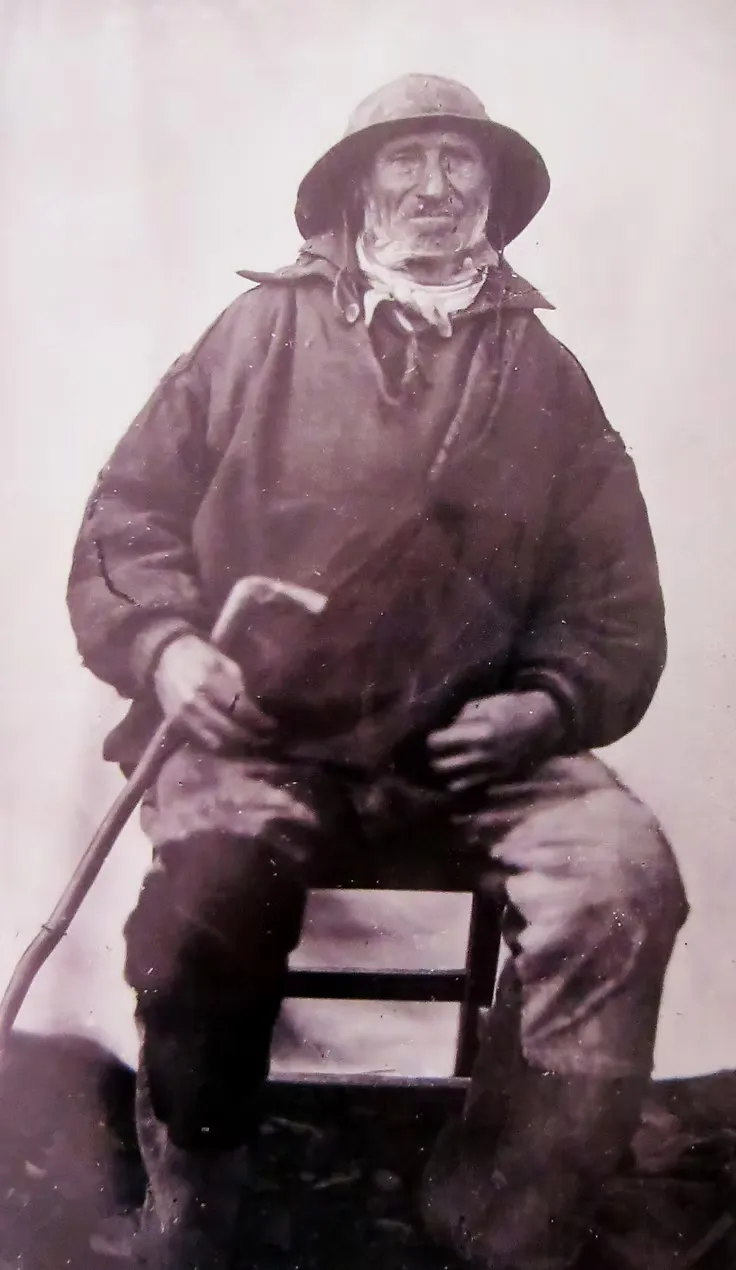
The first Sarkese ever printed was scripture, taken down by ear. In 1862 the philologist Prince Louis Lucien Bonaparte came to Guernsey to confer with George Métivier about the island dialects, and crossed to Sark with HM Sheriff, Stephen Martin. A group of Sark fishermen recited a local version of the Parable of the Sower to him, and he copied it into Mr Martin’s notebook, representing the spoken sounds phonetically, as nearly as he could. Métivier later published the text in the Guille-Allès Library Series.
It begins like this, spelling exactly as printed:
L’chen qui sème s’n allit s’mai; Et tàndis qu’ i s’maitt une partie d’ la s’menche quitt le long du ch’mìnn et l’s oesiaux du ciel vìndrint et i la màndgirent.
(The doubled spaces are the 1862 printing’s own, kept as printed.)
The sower went out to sow, some seed fell along the way, and the birds of the sky came and ate it. Matthew, chapter thirteen, in the voice of Sark’s own boatmen.
A song to be careful with
The language did not only carry scripture. A folk song survives, Man bouonhomme est bein malade, in which a wife whose husband is very ill goes to Guernsey from Monday to Wednesday, comes home to find him dead and already sewn into his shroud, unpicks the stitching with her little scissors, loses her nerve at the throat in case he bites her, and settles the matter another way:
Je l’happis par le gros orté Je l’env’yis avaû l’coti
I took him up by the big toe, and threw him down the cliff. She then calls the crows to gather round and pray for him. Nobody ever accused Sarkese of being sentimental.
Eight hours of voices
La Société Sercquaise keeps an audio archive of the language: about eight hours of conversations recorded on Sark in 1976 by Peter Anderson, together with songs and stories recorded for the BBC in 1938 and 1957. The collection holds short specialist studies and dictionaries of Guernésiaise and Jersiaise, and scholars still work on the language, Dr Mari Jones at Peterhouse, Cambridge, Dr Julia Sallabank at the Project for Endangered Languages at SOAS in London, and Professor Henry Johnson at the University of Otago in New Zealand. La Société has plans for a project on the place names of Sark.
Still being spoken
The language is still being recorded, and still being taught. The linguist Martin Neudorfl has spent years documenting Sarkese with its last native speakers, and his interactive online map of the island records more than 700 authentic Sarkese place names, gathered from speakers, semi-speakers, local fishermen and archival research. Free beginner Sarkese classes run online weekly. And when King Charles III and Queen Camilla made their official visit to Guernsey in July 2024, Sark schoolchildren sang the Queen a Sarkese version of Happy Birthday, and the Seigneur introduced Neudorfl to the King, who asked for a demonstration of the language.
Sarkese in more than 700 place names
You will hear English on Sark, but you will walk through Sarkese all week. The island’s place names are the language’s most public survival, more than 700 of them recorded as authentic Sarkese, and La Société Sercquaise, which keeps the tapes and the dictionaries, welcomes visitors to its Heritage Room during normal opening hours. An island small enough to cross in an afternoon has kept scripture, songs and eight hours of recorded conversation in a tongue of its own. That is the kind of place you are standing on.
