
All Journal stories Sark Island
The Sark JournalWho owns Sark?
Enjoying the Sark Journal? Get new Sark stories by email.
No single person owns Sark.
The island is a Crown Dependency within the Bailiwick of Guernsey. The Seigneur holds Sark’s fief under a grant that dates to 1565. Individual residents own their own homes and land. Chief Pleas, an elected parliament, makes the island’s laws. Those are four different kinds of authority. The centuries old titles attached to them, fief, Seigneur, tenement, Chief Pleas, are why the question sounds harder than it is.
The 1565 grant
In 1565, Elizabeth I granted the fief of Sark to Helier de Carteret. The island was settled and divided into forty tenements, substantial landholdings whose holders formed the quarantaine, the assembly that later grew into Chief Pleas. The forty tenements were held from the Crown by way of the Seigneur, not owned outright by him, a feudal form of land tenure that also produced dues such as the treizieme.
Six years later, in 1571, de Carteret built Sark’s windmill on the island’s highest ground under his own seigneurial authority. Its datestone, “L D 1571” with the de Carteret arms, is thought to be the earliest surviving datestone on any Channel Islands vernacular building.
Who is the Seigneur of Sark?
The Seigneur today is Christopher Beaumont, who succeeded his father Michael Beaumont in 2016. Earlier holders of the fief include John Carteret 2nd, Seigneur from 1715 to 1720, William Thomas Collings from 1853 to 1882, and Dame Sibyl Hathaway from 1927 to 1974.
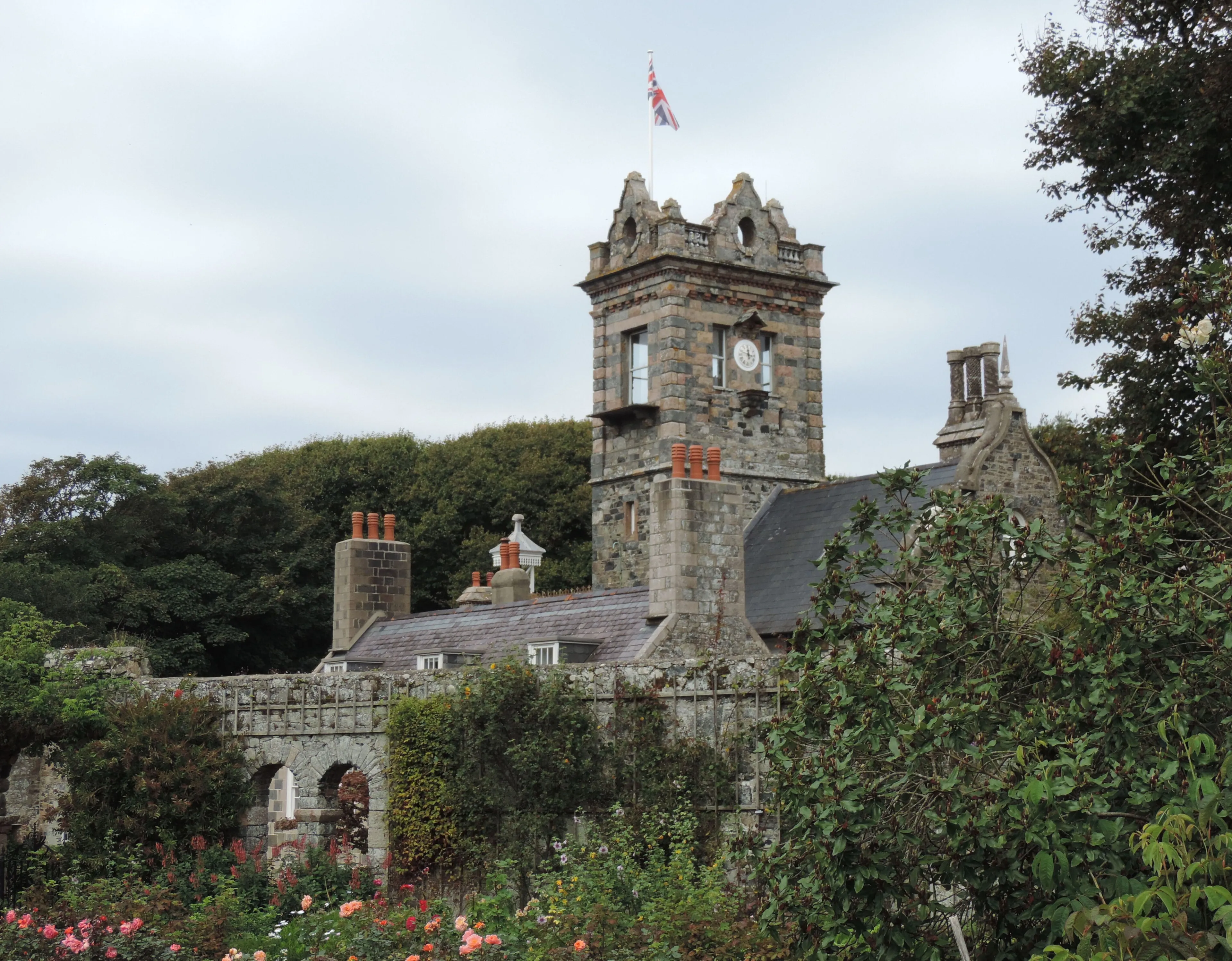
Holding the fief carries constitutional standing, not day to day control. The Seigneur appoints Sark’s Seneschal, who presides over the island’s court with the Lieutenant Governor of Guernsey’s approval, while Chief Pleas makes the law. La Seigneurie, the traditional home of the office, has no governing function. That gap between constitutional standing and real control is exactly what one French physicist misjudged in 1990, when he rowed ashore convinced the fief entitled him to take Sark by force.
Homes and land
Property on Sark is bought, sold and inherited like property anywhere. Under the 1611 charter that codified the 1565 settlement, the Seigneur is entitled to a thirteenth of the price whenever land changes hands, a right known as the treizieme and still in force today, a due owed to the fief, not a landlord’s claim on the property itself.
Owning a house on Sark makes someone the owner of that house, not of the island.
Chief Pleas governs
Sark’s domestic affairs are run by Chief Pleas, an elected parliament of eighteen Conseillers serving four year terms, with half the seats up for election every two years. Anyone who has lived on Sark for two years or more, and is eighteen or over, can register to vote. That electorate sits inside a year-round population of only a few hundred people.
Chief Pleas makes the island’s laws, though new primary legislation needs Privy Council approval. Sark’s international responsibilities are carried by the UK government through the Ministry of Justice, and there is no Sark citizenship.
Why the old names are still used
The vocabulary of 1565 is still in daily use. Sark’s windmill still stands where de Carteret built it. La Seigneurie remains the Seigneur’s traditional home. Chief Pleas is still the name of the parliament that grew out of the quarantaine, the forty tenement holders who once met three times a year.
So, who owns Sark?
Four different kinds of authority answer the question. The Crown is the source of Sark’s constitutional allegiance. The Seigneur holds the fief. Individual owners hold their own homes and land. Chief Pleas holds the power to govern. Each dates to 1565 or grew directly out of that settlement, and none of the four owns what belongs to the other three.
Our very short history of Sark explains how that system developed. The Getting to Sark guide covers the practical journey to the island.
