
All Journal stories The German Occupation of Sark
The Sark JournalDame Sibyl Hathaway and Sark's German occupation
How Sark's Dame dealt with the German occupation from 1940 to 1945
Enjoying the Sark Journal? Get new Sark stories by email.
On 23 June 1940, Dame Sibyl Hathaway called Sark’s residents to a meeting at the Island Hall. Long before the Occupation, Sibyl Collings had climbed and swum around Sark’s coast.
She advised them to stay.
Five days later, German aircraft bombed Guernsey. Sark residents saw aircraft pass overhead, and Sark fishing boats were fired on as the aircraft returned towards France. Nobody on the boats was hurt.
The Germans arrived on 3 July 1940
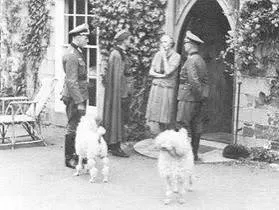
The first German officers reached Creux Harbour on the morning of 3 July. Dame Sibyl sent the Seneschal, Mr Carre, to escort them to La Seigneurie.
The Sark Visitor Centre’s 2020 booklet, Sark: An Island Occupied, records that Carre had been gardening. He cleaned his spade, stopped at the Bel Air Hotel on his way to the harbour and reached the quayside around midday.
The German party included Major-Doktor Albrecht Lanz, Major-Doktor Maas and Staff Lieutenant Muller. The Sark Visitor Centre’s 2020 booklet records that Dame Sibyl went to the school before receiving the officers at La Seigneurie.
Dame Sibyl spoke German
Dame Sibyl had learnt German while working as a YMCA librarian with the British Army of Occupation in Cologne after the First World War.
Some German officers who dealt with Sark came from aristocratic backgrounds, including Baron von Aufsess and Prince Oettingen. The Sark Visitor Centre’s 2020 booklet, Sark: An Island Occupied, describes their dealings with Dame Sibyl as correct and respectful.
Prince Oettingen ordered German medical personnel to provide aid to islanders. Dame Sibyl could deal with officers in German without an interpreter.
German rules tightened during the occupation. Fishing hours were restricted. Radios were confiscated on 12 June 1942, when 157 sets were handed in, although some islanders, including Dame Sibyl, kept hidden crystal sets.
After Operation Basalt, more than 13,000 mines were laid on Sark.
Robert Hathaway was deported
In February 1943, Robert Hathaway was deported with other Sark residents, passing through Compiegne camp before being sent on to Laufen. Dame Sibyl remained on the island.
By the final winter, supplies had failed and hunger had become severe.
The surrender on 10 May 1945
A British detachment of three officers and twenty men, led by Colonel Allen, reached Sark on 10 May 1945. Dame Sibyl accompanied Colonel Allen to meet German commander Hauptmann Magsam and interpreted while the surrender papers were signed. Current sources disagree on the exact building in which the signing took place, so the location is not stated here.
Afterwards, Dame Sibyl took the British party to La Seigneurie. At the start of the occupation she had arranged for bottles of champagne to be buried in the grounds. Her gardener dug them up after the surrender.
The British detachment could not remain. Colonel Allen asked Dame Sibyl to stay in charge for several more days while the disarmed German garrison awaited removal. She said she had already been alone for nearly five years and could manage a few more days.
Full relief arrived on 17 May. A Force 135 party led by Major Clement evacuated about 270 German prisoners of war, although a German doctor stayed temporarily until civilian medical cover could replace him.
Mine clearance and repair continued after the surrender. Two German soldiers, J Dekan and A Hoppe, were killed while clearing mines above Creux Harbour. Later, German prisoners working under Royal Engineers supervision resurfaced La Coupée and added handrails.
For the wider account, read Sark in the Second World War.
