
All Journal stories Pirates, Smugglers and Shipwrecks
The Sark JournalThe Sark pirates who stole the beer
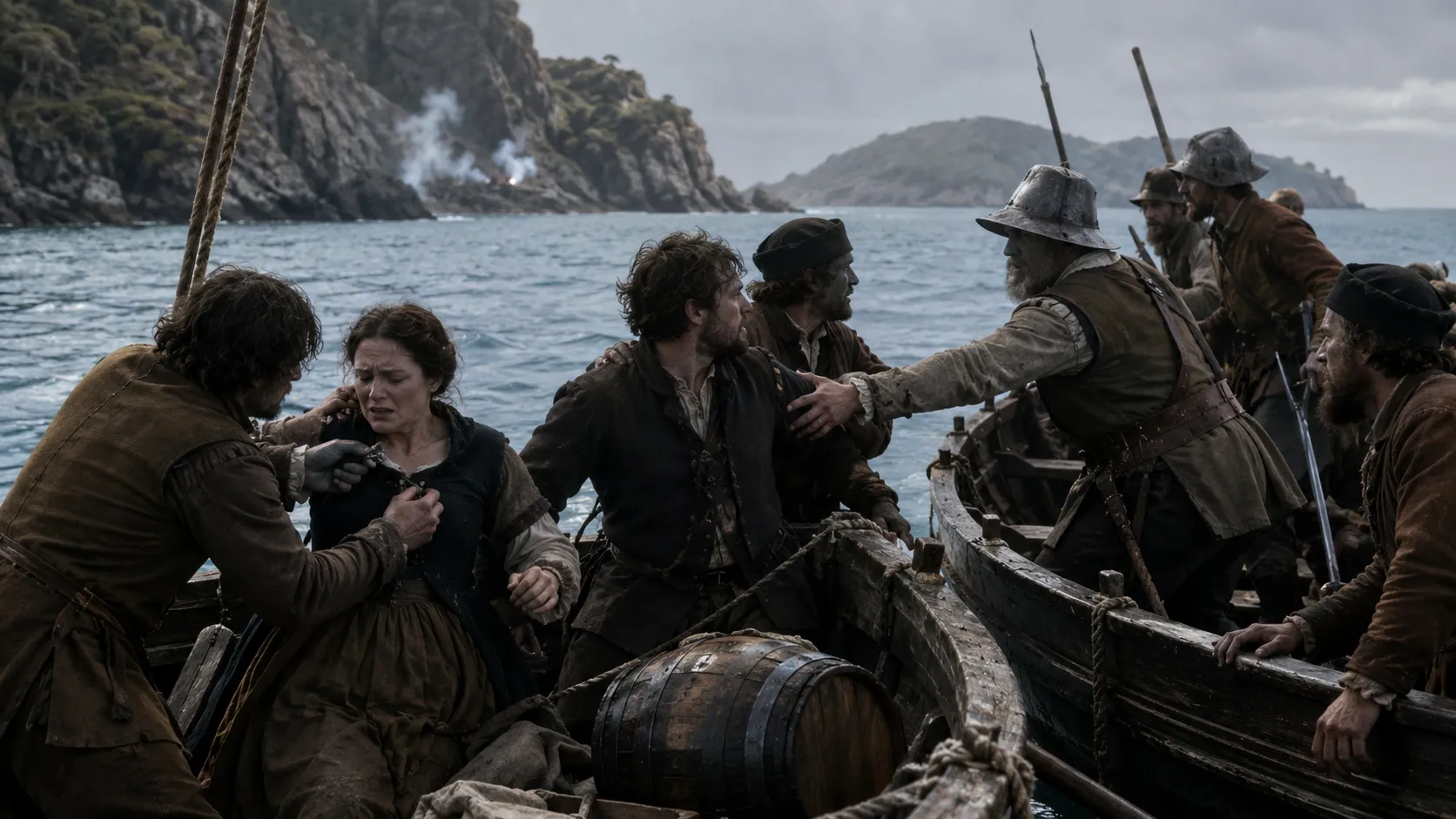
A surviving account records kidnapping, betrayal, stolen cattle, a woman's silver pin, a barrel of beer and cannon fire.
Enjoying the Sark Journal? Get new Sark stories by email.
The pirates began with three cows.
Then they kidnapped John Hotton.
They robbed Janette du Val of a silver pin, took a barrel of beer from the boat and ignored a demand from Sark to release their prisoner.
Only cannon fire persuaded them to leave.
This pirate story is unusually vivid because the people involved have names and the stolen property is painfully ordinary.
The account survives through the notebook of Elie Brevint, minister of Sark from 1612 until 1674. The Priaulx Library says the note was written around 1610 and referred to events during the time of Brevint’s father Cosme, who had also been minister on Sark.
The pirates were English.
Their victims were people trying to get home.
Three cows on Brecqhou
The first theft happened on Brecqhou.
The pirates took three cows belonging to Guernsey men.
Soon afterwards they met a Sark boat returning from Guernsey.
John Hotton was aboard. So was Philip Vaudin.
According to Brevint’s account, Vaudin told the pirates that Hotton was highly skilled at sea.
The information made Hotton valuable.
The pirates took him as their pilot.
Vaudin escaped.
Hotton later complained that Vaudin had sold him.
The accusation is the human centre of the story. Faced with armed men, one passenger redirected their attention towards another man and got away.
Janette du Val and the barrel of beer
The pirates continued searching the Sark boat.
They tore a silver pin from Janette du Val.
Then they took a barrel of beer.
Those details are more useful than any treasure chest.
They show what piracy looked like when it reached an ordinary boat. Livestock could be stolen. Jewellery could be pulled from a woman’s clothing. A sailor could be taken because his skills were useful. Alcohol was valuable enough to carry away.
The guard on Sark challenged the pirates and demanded Hotton’s release.
They refused.
Cannon fire from the island eventually drove the vessel away from the coast.
Hotton was still aboard.
Hotton gets away
The pirates sailed towards Jersey.
Near La Corbiere they encountered a boat from Alderney and boarded it.
Hotton threw himself into the Alderney boat.
His captors did not recover him.
Hotton had escaped.
The pirates did not have much longer.
The next news recorded in Brevint’s account was that Bretons had captured them and taken them to Brittany, where they were executed.
Hotton returned to Sark and raised the grievance that still survives in the record.
Philip Vaudin had sold him.
Cosme Brevint did not give him the answer he wanted. He treated Vaudin’s act as a trick of war and told Hotton to thank God that he had escaped.
Four centuries later, it remains remarkably easy to understand why Hotton was not satisfied.
The pirate story from the smaller boat
The larger pirate stories tend to centre on rulers and celebrated commanders.
This one belongs to the people in the smaller boat.
That changes the scale.
To the owners of the cattle, piracy meant three missing animals.
To Janette du Val, it meant a hand taking silver from her person.
To Hotton, it meant being made useful to violent strangers because another man wanted to save himself.
The account also shows that Sark’s resettlement did not isolate the island from maritime crime.
The sea remained a working route between Sark, Guernsey, Jersey, Alderney and the French coast. A boat carrying ordinary islanders could meet a pirate vessel somewhere in that network with very little warning.
That is why the barrel of beer matters.
It replaces the romantic image of piracy with something more ordinary.
These pirates were opportunists taking whatever had value and whatever helped them continue, not characters arranged around buried treasure.
The cannon, the kidnapping and the executions give the story its violence.
The cows, the pin and the beer make it believable.
For the wider context, read our short history of Sark and the story of Eustace the Monk, who used Sark as a base centuries earlier.
