
All Journal stories Pirates, Smugglers and Shipwrecks
The Sark JournalWas Sark really a smugglers' island?
The caves look perfect for contraband. The historical record is more complicated.
Enjoying the Sark Journal? Get new Sark stories by email.
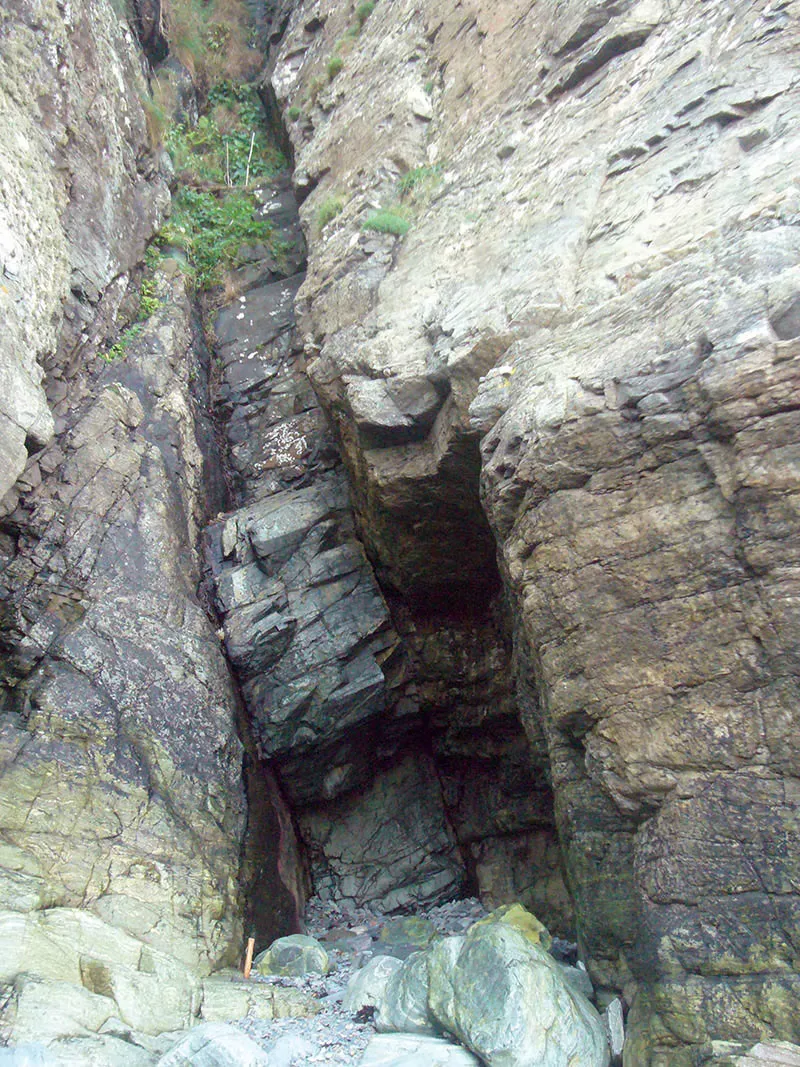
Sark has exactly the kind of caves in which you would hide contraband.
That is not proof that anybody did.
The distinction matters because the island’s coastline makes a smuggling story feel true before the evidence has been checked.
The Boutique Caves in the north of Sark contain a long tunnel ending in a deep chamber. VisitGuernsey describes the system as historically associated with smuggling and the storage of contraband. The reflected light turns the water emerald and sapphire deeper inside.
It is not difficult to imagine a small boat arriving with casks.
The historical record is less obliging.
The wider Channel really was smuggling country
The Channel Islands sat beside one of Europe’s busiest trading routes and close to the French coast. Differences in customs rules and duties created opportunities for traders who knew how to move goods between jurisdictions.
Historian David Chan Smith has written about this early modern offshore economy and the way islands could exploit legal privileges and high taxes elsewhere.
His work contains one awkward detail for anyone hoping to make Sark into a ready made smugglers’ paradise.
Sark, he notes, was typically described as free from smugglers because its proprietors were more interested in agriculture.
That doesn’t prove no contraband ever came ashore here, only that the easy version of the story needs more evidence.
A cave associated with smuggling is a lead.
A named seizure, boat, court case or customs report would be proof.
The money we can trace more confidently
There is a better documented maritime economy connected with Sark: privateering.
Privateers were privately owned armed vessels authorised during wartime to capture enemy shipping. The legal distinction from piracy mattered enormously to the people doing it, because a successful capture could become a recognised prize rather than stolen property.
The experience for the ship being taken may have looked less different.
Sark benefited from that money.
La Societe Sercquaise’s history of the island states that Sark houses were gentrified on profits from Guernsey’s privateers.
The same history immediately gives the other side of eighteenth century life on the island. By the 1780s, rural poverty, alcoholism and political discontent had become serious enough to draw concern from Methodist reformers.
Those facts belong beside one another.
Maritime wealth did not make everybody prosperous.
From privateering money to the fief
The connection eventually reached the ownership of Sark itself.
The mining venture on Little Sark left the ruling family heavily indebted in the nineteenth century.
In 1852 Marie Collings foreclosed and bought the fief for £1,600.
She was the daughter of Jean Allaire, whom La Societe Sercquaise describes as a Guernsey privateer tycoon.
That connects two separate chapters of Sark’s maritime history: outright piracy in the medieval period, and legitimate privateering money centuries later. The line between the two depended partly on law, war and who had issued permission.
So, were there smugglers?
Probably, but “probably” is not proof.
The Boutique Caves have a persistent association with contraband and their geography makes the story plausible. Sark also sat inside a wider Channel economy in which smuggling was real and profitable.
Yet the checked academic source specifically warns against assuming that Sark behaved like the better documented smuggling centres around it.
That tension is more interesting than a simple claim.
It gives us a research question that can still be answered.
Which Sark boats were stopped?
Which families appear in customs papers?
What goods were seized?
Were the caves actually used as stores, or did later visitors attach a familiar coastal legend to places that looked suitable?
Until those records are found, the honest version of Sark’s smuggling history has a gap in it.
What’s left is the caves, the stories, and hard evidence of privateering wealth.
The smugglers themselves remain harder to catch.
If you want to see why the coastline produces these stories, start with our guide to Sark’s history. The maritime collection continues with the Pilcher Monument and the five men lost in 1868.
