All Journal stories Restoration
The Sark JournalWhat a week can and cannot do for burnout
What the research says a real break does, and the honest part most retreat websites leave out
Enjoying the Sark Journal? Get new Sark stories by email.
Burnout is not just being tired.
The researchers who first defined it describe three things arriving together: exhaustion, a growing distance from work that used to matter to you, and the quiet sense that nothing you do makes a difference any more. The World Health Organization describes it the same way, as the result of workplace stress that has gone on too long without a proper break. Tiredness is only the first third of it. The harder parts are the detachment and the feeling of being unable to change anything.
I recognise it because I have lived the treadmill that builds it. Stuck in traffic. Everyone needing something from you. No hour of the day that is yours, to just be. I did not create this retreat to treat burnout, and I will never claim it does. I created it to share Sark, because this island undid something in me the first time I came. But when guests arrive carrying the treadmill with them, I know exactly what they have brought.
What the research says actually helps
The people who study recovery from work stress keep landing on the same finding, and it is not about where you go.
It is called psychological detachment: genuinely switching off from your obligations, rather than just being physically away from them. A holiday spent checking the inbox on a nicer sofa does not do it. The research is equally clear that a real break works while it lasts: a genuine respite measurably lowers exhaustion and lifts wellbeing.
So the useful question about any week away is simple. Will it actually switch you off?
Why switching off is easy here
On Sark, switching off does not take willpower, and that is the reason it works.
The island removes the noise. There is no traffic to navigate, no street lighting to keep the evening artificially awake, and nowhere you are supposed to be. The retreat removes the demands. Your meals are cooked, your days have a light schedule you did not have to plan, morning yoga, breakfast after practice, afternoons that are entirely yours, and nothing is compulsory.
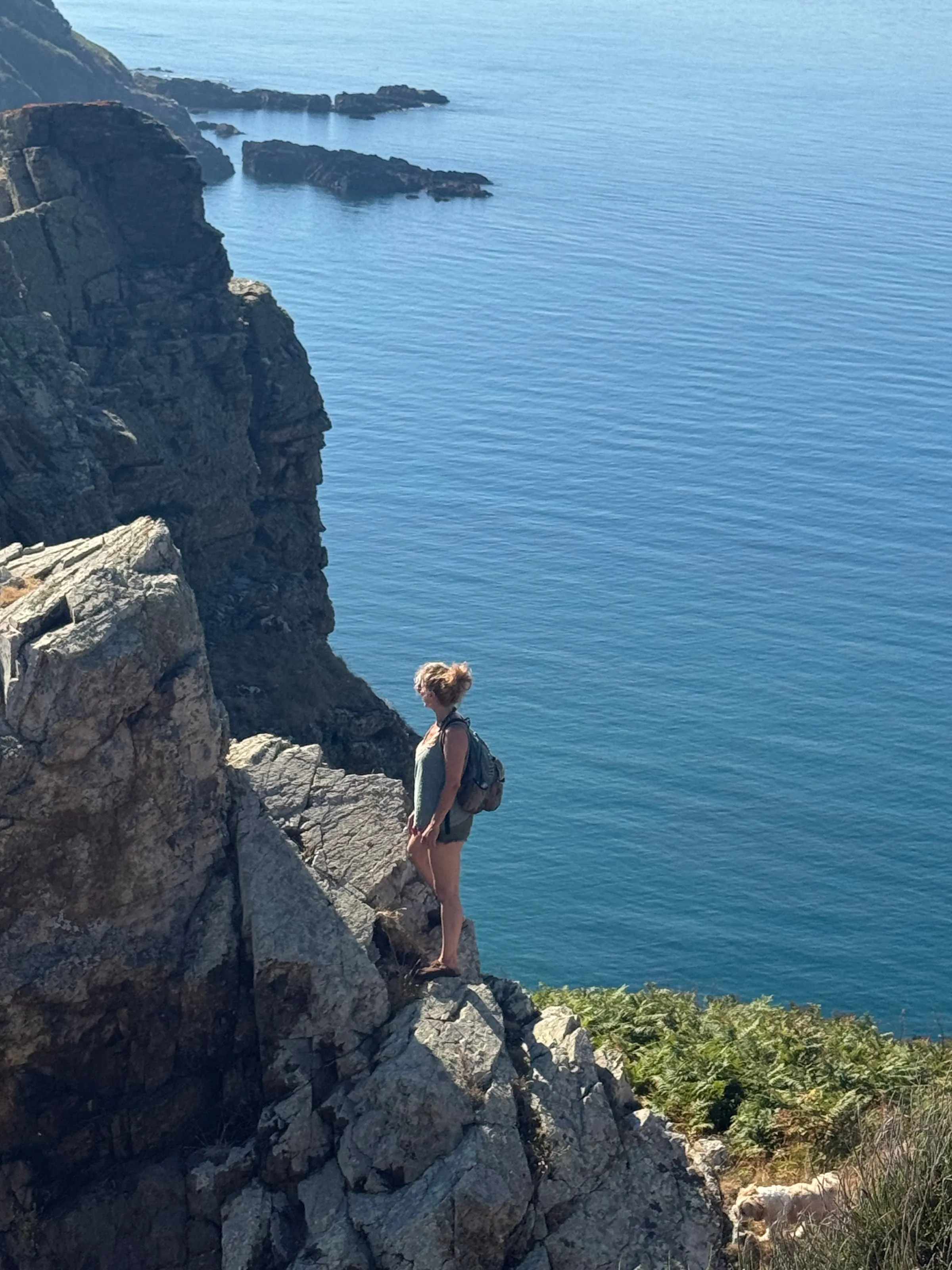
What fills the space is walking, water and darkness, and each carries real evidence. Walking measurably eases low mood and anxiety, about as well as any exercise studied. Time in nature is linked with lower stress and better reported health, and in one English study of around twenty thousand people, two hours a week in nature was the threshold where wellbeing rose. Water does something particular. Attention researchers call it soft fascination: moving water holds the mind without asking anything of it, so tired attention finally gets to rest. Sitting by the sea doing nothing is not doing nothing. Darkness is the strongest of the three: ordinary indoor evening light is enough to suppress melatonin, the hormone that tells your body night has begun, and most of us live inside that disruption permanently. Here, when the sun sets, the island goes truly dark. Guests tell us they sleep better from the first night.
The honest part
Here is what the same research says, and most retreat websites will not tell you.
The benefits of a break fade. In the classic study, people came back from holiday measurably better, and within days their burnout was partway back, and within weeks most of the gain was gone, because they had returned to an unchanged life. A week on Sark is not a cure for burnout. I will not pretend otherwise.
What a week gives you is different, and worth having. It gives your nervous system a rest long enough that a settled state becomes familiar again. And it shows you the distance between that state and what you had been calling normal, which is very hard to see from inside the noise. The week is designed so you go home knowing what settled feels like and what you want to protect. Protecting it means changing something at home, and that part belongs to you. The week is where you get the clarity to choose what changes.
If burnout is why you are looking
Helping with burnout is one of the many outcomes of the retreat, and the island does the heavy lifting. The burnout retreat page covers what the week includes and how the days run. The Getting to Sark guide takes the journey planning off your list, which, if you are exhausted, may be the most useful thing we can hand you today.
Nadia 🌿
