
All Journal stories Nature on Sark
The Sark JournalSark's birds, counted
What two years of careful counting reveal about the island's seabirds, owls and rare visitors
Enjoying the Sark Journal? Get new Sark stories by email.
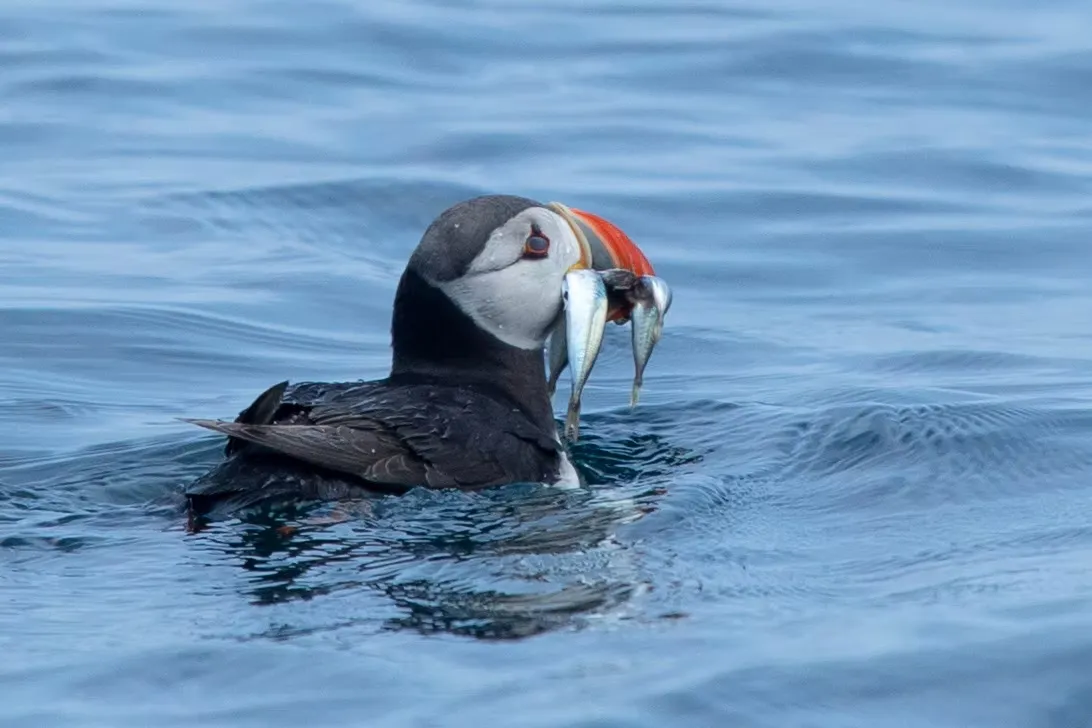
Sark’s seabird colonies are growing, and the growth has been measured, not guessed. In 1968 the guillemot colony at Les Autelets held 76 breeding pairs. By 2022 it held 175, a second colony at Les Burons, only begun in 2019, had already reached 200 pairs, and in 2025 drone surveys counted more than 1,000 birds across the two sites combined.
The 2024 season sits inside that rise. Whole-colony counts across three survey dates in May and June averaged 364 guillemots at Les Burons and 335 at Les Autelets, figures La Société Sercquaise’s own ornithology report describes as very good numbers. Razorbills held steady at 65 breeding pairs, including a new colony of 40 pairs at Les Fontaines, and fulmars climbed to 30 pairs across seven sites, up 87.5 percent on the year before.
The monitoring itself has been recognised beyond the island. In June 2025 the Société’s Seabird Monitoring Project, led by Lynda Higgins and using drone technology to track the growing colonies, won the Best Conservation Project Award at the 35th annual Bailiwick Conservation Awards, with a £3,000 prize for continued conservation work.
The kittiwakes came back, for one season
Kittiwakes bred on Sark within living memory, but only just. The last confirmed breeding record is 30 to 40 pairs on the west face of Moie du Mouton in spring 1946, and after that no kittiwake bred here for almost 80 years.
Then, on 24 May 2024, five pairs were seen displaying courtship behaviour and carrying nesting material at Les Burons, the first time in recent record. An aerial survey on 30 June found what looked like a single egg. It failed to hatch, and the birds had left the site by about 10 July. The whole attempt came to one egg and no chick.
A failed season still matters, because of what success would mean. If a later attempt succeeds, Sark will become the most southerly kittiwake breeding site in the British Isles.
Two kinds of owl
Long-eared owls follow their own pattern of boom and gap. After successful breeding in 1993 and 1994, none bred on Sark until a pair returned to Dixcart Woods in 2019 and raised two chicks; the same pair, or their successors, raised at least five there in 2020. Since their last success in 2022, they have not returned to breed.
Barn owls are steadier. Two breeding pairs were present on Sark throughout 2024 and both bred successfully, while repeated sightings on the east of the island suggested a possible third pair.
A pair of storks and two chough
The one genuine rarity of 2024 did not stay. A pair of White Storks flew east over Sark on 20 April and passed over Guernsey an hour later. The Bailiwick of Guernsey’s rare bird report for that year, which covers Guernsey with Herm, Jethou, Lihou and selected Alderney and Sark records, lists those two storks as its only Sark entry. The same season brought scarcer than usual sightings of osprey, hoopoe and honey buzzard, with cuckoo heard calling in several woodland areas.
Spring 2025 added something the island’s standard list does not otherwise hold: two chough, seen on the west side of L’Eperquerie on 28 April 2025, a species absent from the usual roll of birds recorded on Sark.
What the records show, and what they withhold
Taken together, the 2024 and 2025 records cover 77 bird species for Sark. They do not tell you everything. The nest locations of rare or protected breeding species are deliberately withheld from the published data, so the birds are listed, but not always where they raise their young. The full species list and the numbers behind this article are on our birds of Sark page.
Publishing the bad breeding years too
For a visitor, all this arithmetic carries a simple reassurance. An island that has logged its guillemots since 1968, publishes a failed kittiwake season as faithfully as an award winning survey, and withholds nest locations to protect its rarest breeders, is an island whose people take their birds seriously. What you see from the coastal path is one part of that long, careful account, and on its evidence the seabird colonies are growing. The Getting to Sark guide covers the journey to the island.
