
All Journal stories Things to Do on Sark
The Sark JournalLittle Sark
Enjoying the Sark Journal? Get new Sark stories by email.
South of La Coupée is Little Sark, and far fewer people make it this far.
The paths are quieter here
You may not see another walker for long stretches, only the waves, the birds, the sheep, and sometimes nothing at all.
The oldest ground on Sark
Little Sark holds the island’s earliest confirmed settlement: Neolithic farmers, carbon-dated to around 4,800 BC, whose pottery and building style resemble Normandy more than Britain. Oxford University archaeologists led by Sir Barry Cunliffe have carried out annual digs on Sark since 2003, uncovering Stone Age terraces and burial stones here, and Bronze Age coins and ornaments near the site believed to be where the Sark Hoard, silver and coins from the 1st century BC, was found in 1719.
Near the path to the Venus Pool, on the coast side and easy to miss, is a marker of that same long span: Sark’s only complete dolmen, believed to be around 4,000 years old. A huge capstone rests on five of the ten boulders beneath it, forming a simple cist.
Port Gorey and the silver mine
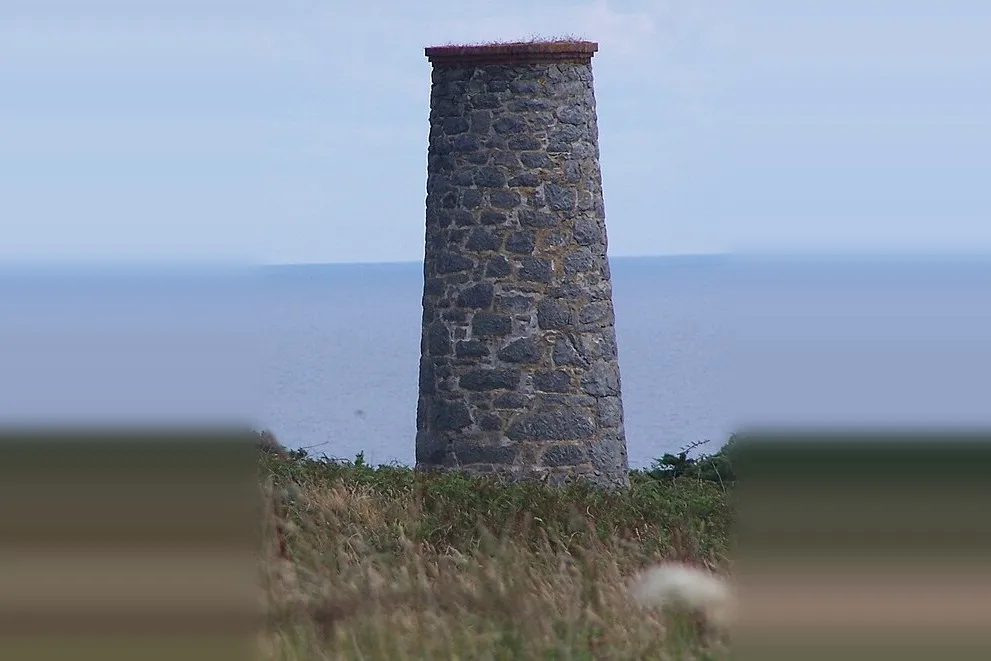
Port Gorey holds the ruins of Sark’s one attempt at a silver mine. The mine was worked through the 1830s and 1840s before flooding and failure ended it. The losses cost the Le Pelley family the Seigneurship itself. The last piece of the mine’s Engine House stood until a gale finally brought it down on Valentine’s Day, 2014.
Nearby, the Gorey Souffleur Cave still does something the mine never managed: in a south westerly gale, pressure building inside its domed roof throws a column of spray straight up into the air.
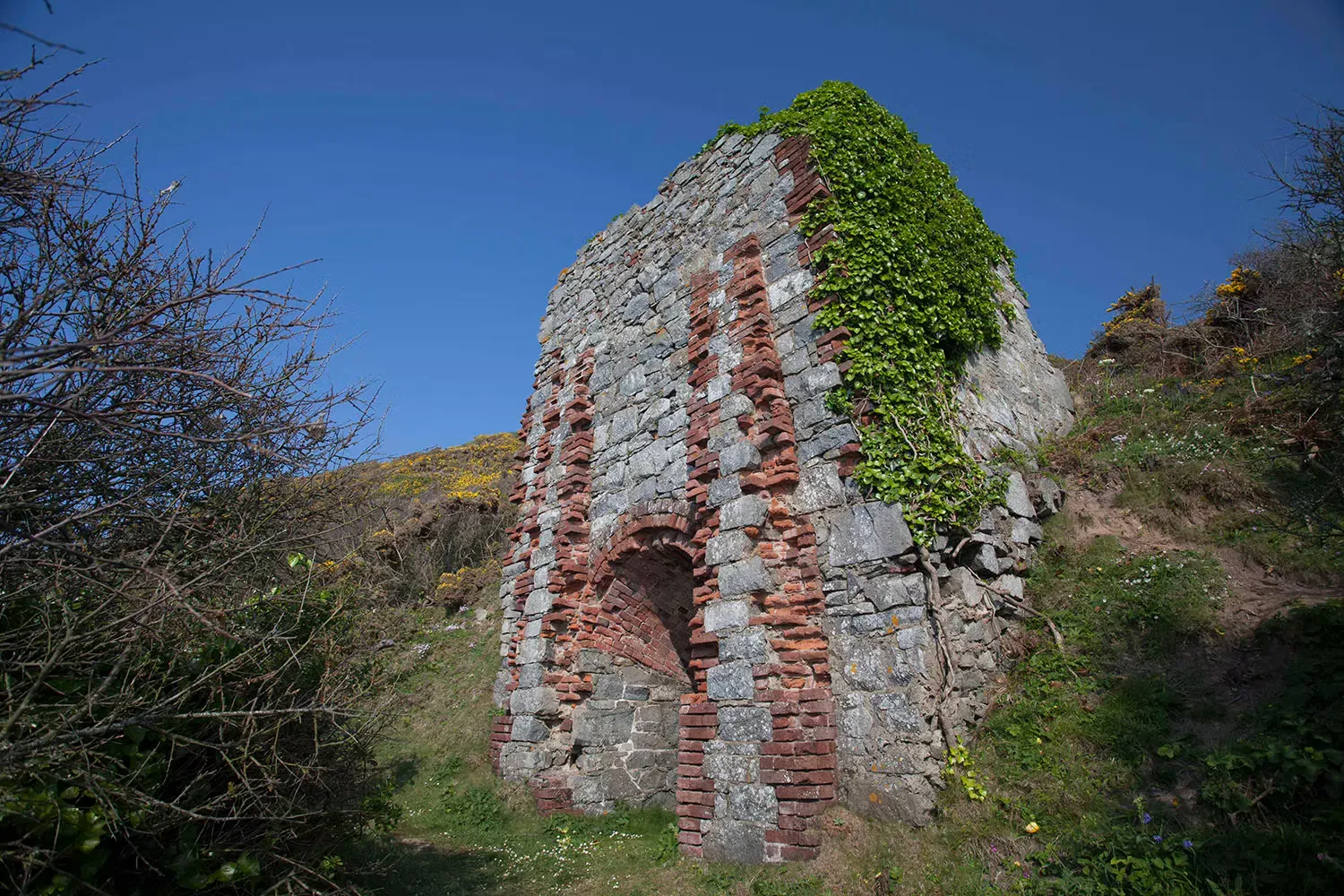
Long before the mine, Port Gorey had its own story attached to it. A tale recorded by folklorist Edith Carey in 1896 tells of a fisherman, William de Carteret, who is said to have summoned the Devil to carry him home from Port Gorey, tricking Satan into carrying him the whole way before banishing him at his own doorstep.
A mill built out of defiance
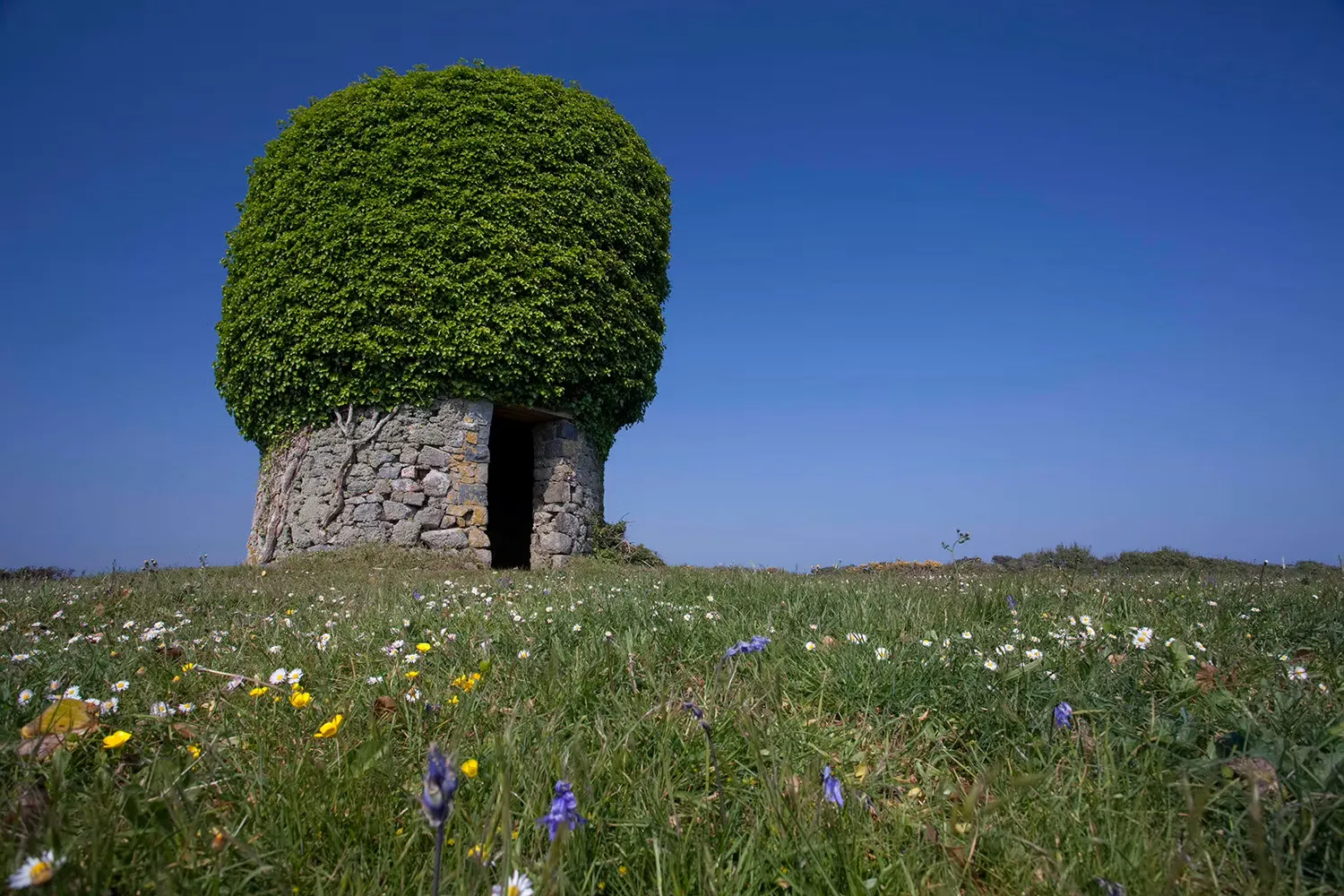
In October 1797, tenants resentful of the Seigneur’s milling monopoly set fire to Sark’s windmill. Three of them had already built illegal stone mills of their own rather than pay to use his. The one on the Hogsback is largely ruined today, but Baker’s Mill, at La Pipeterie on Little Sark, still stands.
La Sablonnerie
At the southern end of Little Sark is La Sablonnerie, French for “place of sand”: two 16th-century farm cottages the Perree family ran as a hotel and restaurant from 1948. Elizabeth Perree trained at Le Cordon Bleu in London and built the kitchen into a Michelin star. Lobster, caught and cooked the same morning, was the dish people came for. It has been closed for a few years, but the building remains one of the prettiest on the island.
The site carries older, harder history too. In the 1620s, La Sablonnerie was home to the Nicole family. Jean Nicole came under suspicion of sorcery from about 1612 and was exiled from the Bailiwick in 1620. His wife, Rachel Alexandre, then managed the place alone for seven years with their children. In 1627, Rachel, her sister Judith and her stepson Job were arrested. Rachel was convicted of sorcery and executed on 25 August 1627; Judith and Job were banished the same day.
Two natural pools in the rock
Little Sark has two of Sark’s best-known tidal pools. Venus Pool, on the Clouet Bay side, is covered in full in our Venus Pool article. Adonis’ Pool, near Rouge Caneau Bay, is deeper again, sixteen to eighteen feet, and only reachable for about two hours either side of low tide.
Nothing to rely on but yourself
Little Sark has no shop and no pub. There is a café, the Snack Shack. Mobile signal, patchy across much of Sark, is patchier still out here. Bring water, bring what you need, and treat the crossing as the point rather than an inconvenience on the way to one.
Why cross for it
What is here rewards the extra crossing: ground settled since 4,800 BC, a mine that ruined a Seigneur, a mill built in defiance of him, a dolmen believed to be 4,000 years old, and pools the tide uncovers for a couple of hours at a time.
Our La Coupée article explains the crossing that gets you here, and how it changes your pace. Walking Sark covers how the island’s wider path network fits together.
