
All Journal stories Nature on Sark
The Sark JournalSark's moths and the light trap
A donated trap, a wet year and a log kept exactly as written
Enjoying the Sark Journal? Get new Sark stories by email.
Michael Shaffer, one of the recorders who built Sark’s moth list, wrote that from the large fauna present it is possible to observe live adults at almost all times of the year. In almost any month you could visit, some of them are on the wing.
A light on a dark island
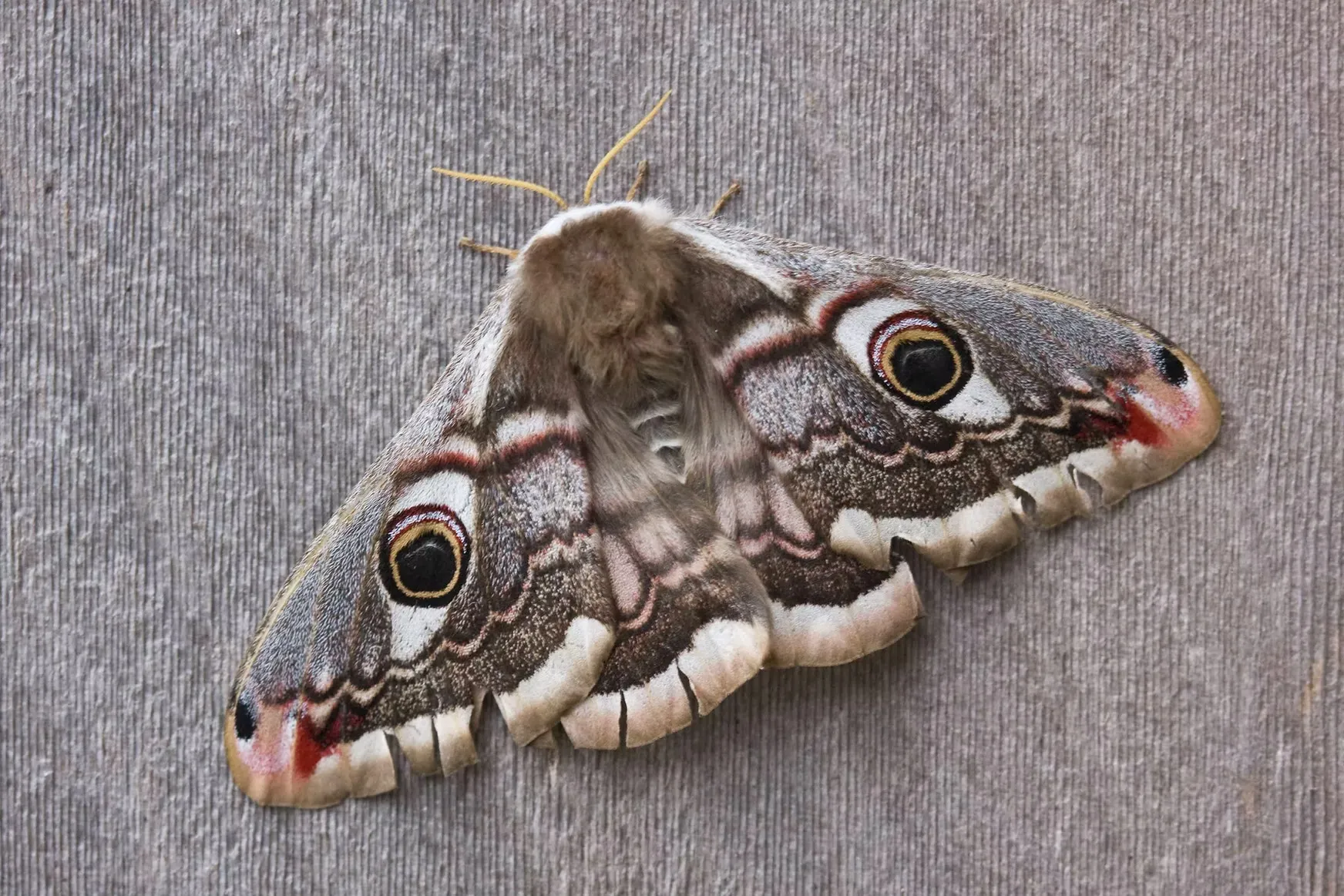
Most of Sark’s 2024 moth records came from a light trap, a lamp set out after dark and checked for what has arrived. Sark has no street lighting anywhere, and in January 2011 the International Dark-Sky Association designated it the world’s first Dark Sky Island. The island’s moth ledger is compiled by lamplight.
Made for Roger Long
There is a trap on the island with a history of its own. Among the resources La Société Sercquaise holds for visiting entomologists, with the annual lists, the field guides and a student microscope, sits a Heath Actinic Moth Trap donated by Roger Long, for whom it was specially made. Long earned his place in this story early: in 1970, at La Société Jersiaise, he listed 57 species of butterflies for the entire Channel Islands, 39 of them for Sark.
The wet year
2024 was the kind of year that keeps a trap in. An early, mild February gave way to a cold, wet, windy spring. Insects collected in malaise traps during a very wet July and August came in more than 50 percent down on previous years, and the Pollinator Project’s bee survey struggled to find enough bees to complete its counts. The light trap was set less often than usual, in April, May, July and August, with the remaining records arriving as incidental sightings.
Then came October, and with it a sudden explosion of moths, butterflies, caterpillars, bees and mosquitos. The same month produced a first for the island: the large conehead bush-cricket, a continental species spreading northwards, was recorded on 15 and 16 October at one site on Mill Lane, having reached Guernsey, Alderney and Lihou in 2021 and Herm in 2022.
Kept exactly as written
The season survives as a dated log, Appendix 1 to La Société Sercquaise’s 2024 entomology report by Lynda Higgins, and it is published exactly as written. Its title reads Sark Moth/Butterly Records 2024, spelling as printed, and the species names are kept as printed too, apparent slips included. Each row carries the date, the species, the number in the trap, the minimum temperature, the weather and the reporter. Every row is on our Sark moth records page.
One year against the whole list
That one wet year still yielded 68 species of moths. Sark’s butterflies and moths have been well studied since 1873, when W A Luff found 48 species of moths and 28 of butterflies, and the regular annual recording carried on by Margaret and Roger Long and by Michael Shaffer with his wife Dr Monika Shaffer-Fehre has brought the total number of Lepidoptera recorded on Sark to 566, the vast majority moths. Shaffer’s study, Lepidoptera of the Channel Islands, was published in 2008, less than a year before his death. The 68 and the 566 measure different things: one wet season, against a century and a half of looking.
Sark’s moth calendar through the year
Shaffer’s fuller observation is the practical one for a visitor. Most species are highly seasonal, he noted: a few produce adults in winter to very early spring, others fly only in autumn, and the majority have two or more breeding cycles a year from late spring to late summer. Hibernating adults may fly in warm winter spells, and in warmer weather many breeding species have their numbers vastly boosted by annual migrations between the islands, especially directly from the Continent. Whatever the month of your visit, you arrive somewhere inside that calendar. Our Sark after dark article covers the nights themselves, and how the island came by its darkness.
