
All Journal stories Murder, Ghosts & Things in the Dark
The Sark JournalThe cave beneath Little Sark that seemed to cry
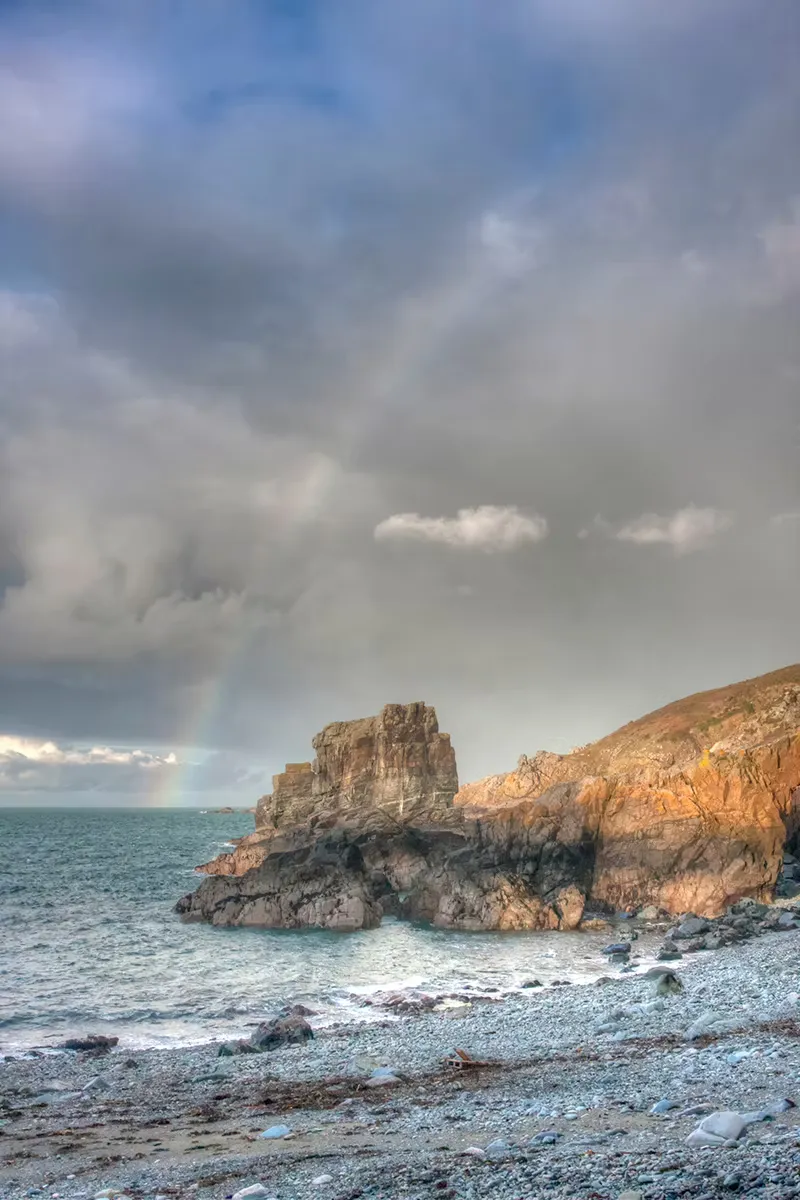
A cave below La Coupee became part of Sark folklore because the sound coming from it needed an explanation.
Enjoying the Sark Journal? Get new Sark stories by email.
There is a cave beneath Little Sark whose name already tells you what people thought they heard there.
La Caverne des Lamentes means the Cave of Laments.
Sark folklore ties the cave to drowned sailors, whose cries were said to carry from it during southerly gales.
The more useful question is why this particular place produced such a story, not whether the cries were ghosts.
The cave sits in a landscape where people already knew that wind, sea and cliffs could kill.
Beneath La Coupee
The Cave of Laments belongs to the same part of Sark as La Coupee, the exposed crossing into Little Sark.
Before protective rails were installed, La Coupee was far more intimidating than the crossing visitors know today.
People had died there. Others described being too frightened to cross without help.
Then there was the sound from below.
The folklore account ties the cave to American sailors said to have drowned after a wreck at Boue Americaine. During southerly gales, their cries were said to remain audible from the cave.
The sailors belong to the story as it was told. The wreck itself is not independently verified history.
The cries are folklore. The cave and the dangerous coast are real.
Why people attach stories to caves
Sea caves are difficult places to understand from above.
You can hear water entering rock without seeing where it goes. A swell can force air through narrow openings. Sound reflects from surfaces that are invisible from the path.
Sark’s older cave names show how often islanders noticed unusual effects around the coast.
The Dog Cave was said to bark under certain combinations of wind and tide. A souffleur on Little Sark can throw spray upwards during a south westerly gale.
The island’s caves could produce sounds and movement without showing the person above exactly what was happening inside them.
A noise resembling a cry did not need a supernatural cause to be disturbing.
Darkness changes the information available
On an island without street lighting, a person walking near La Coupee at night could hear the sea and wind without being able to see the water below.
The crossing itself had a history of fatal falls.
The folklore of the same area included the Tchico, a black hound associated with death, along with stories of a headless horseman and a floating coffin.
A person crossing in darkness could therefore know that the cliffs were dangerous, hear a human sounding noise from below and already have a language for what such a sound might mean.
The stories and the physical danger occupied the same piece of Sark.
The sea could keep the dead
Maritime death was part of how a coastal community understood disappearance.
People who drowned around Sark were not always recovered quickly, or at all.
The 1868 disaster commemorated by the Pilcher Monument left five men dead.
Peter Le Pelley drowned in 1839.
A story about voices from the sea therefore had a different weight in a community where some of the drowned never came home for burial.
A missing sailor somewhere among the rocks and caves was an idea islanders could understand from experience.
What folklore preserves
The useful question isn’t whether nineteenth century Sark residents were right about ghosts, but what the story preserves about the place.
People noticed the cave’s sound and attached a name and an explanation to it.
Wrecks and drownings were part of the way the coast was understood.
A natural noise and a supernatural warning did not need to be mutually exclusive in every telling.
A person could know that wind made strange sounds in caves and still dislike hearing one while crossing above a black sea.
The same place in daylight
Walk into Little Sark on a clear day and the setting is easy to admire.
The sea can be bright, the cliff edges visible and the whole shape of La Coupee readable at once.
The older stories belong to the same geography under different conditions.
Remove the rails, remove daylight and add a southerly gale. Then imagine hearing a cry from a cave you cannot see.
No supernatural explanation is required to understand why people remembered the sound.
The combination of darkness, dangerous cliffs and an unseen source was enough.
For the wider history of the crossing, read La Coupee. For the landscape beyond it, continue into Little Sark.
