
All Journal stories Witchcraft, Magic and Mystery
The Sark JournalSex with the Devil: what Guernsey's witch trials recorded
The 1617 case began with alleged harmful magic. The Devil, the Sabbath and the sexual confessions entered the record after conviction and torture.
Enjoying the Sark Journal? Get new Sark stories by email.
On 4 July 1617, Guernsey’s Royal Court sentenced Collette du Mont, Marie Becquet and Isabel Becquet to death for witchcraft.
The case against them had centred on alleged harmful magic: sick people, dead or miscarrying animals, failed milk, curds that would not set and objects treated as charms.
Then the court ordered torture.
Its stated purpose was to make the condemned disclose their supposed accomplices.
The elaborate supernatural confessions came afterwards.
Before torture, the accusations were ordinary misfortunes
The earlier evidence concerned things neighbours believed they could observe.
People and animals became ill. Livestock died. Milk failed. A family opened a mattress and believed it contained charms. Isabel Becquet came to the house of a sick child and was refused entry.
Collette described black ointment and flight
Under torture, Collette du Mont said the Devil appeared to her as a cat and as a dog.
She described receiving black ointment, rubbing it on her body and being carried through the air to a Sabbath.
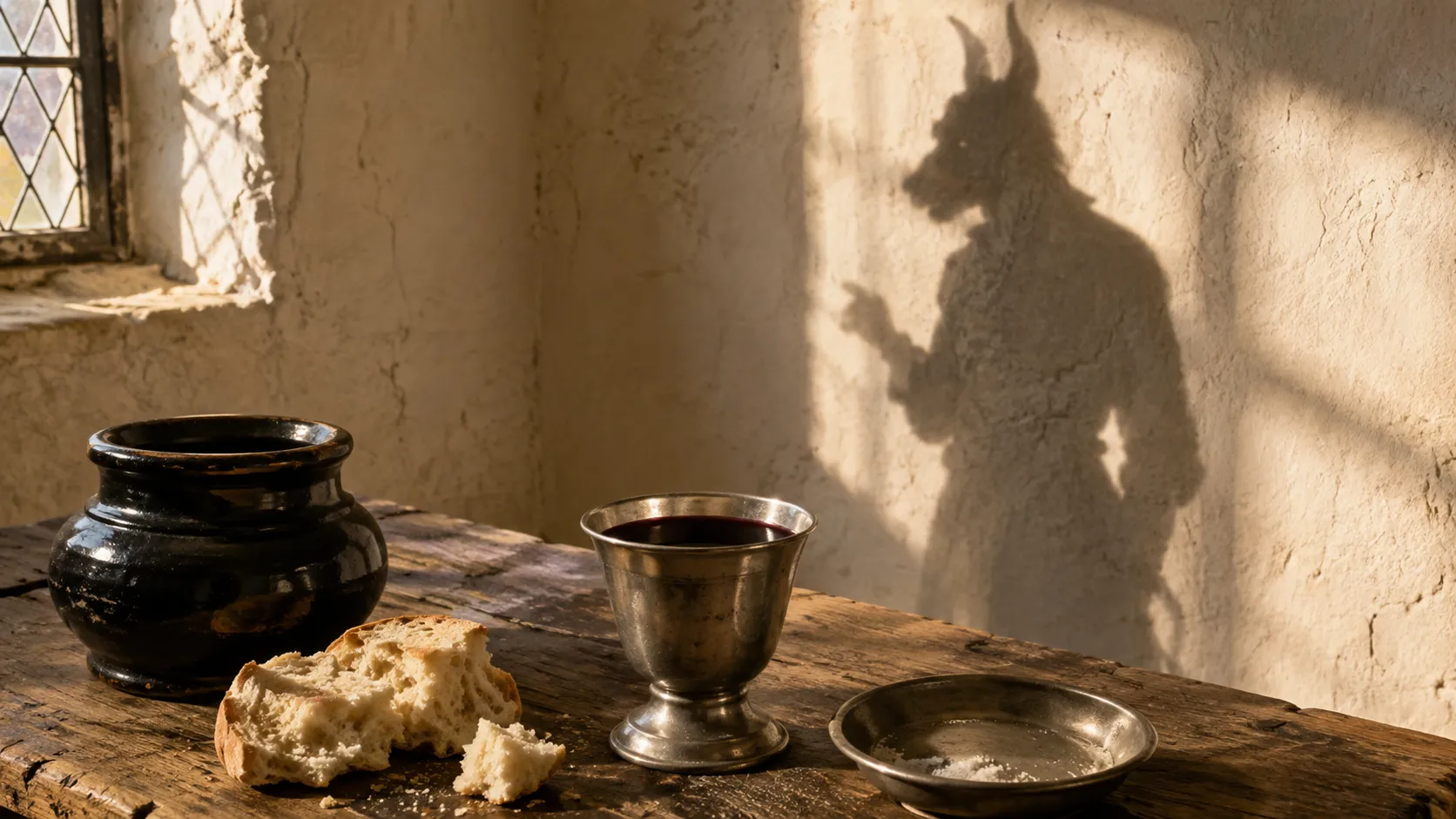
She said Devils appeared as dogs, cats and hares, and that the witches worshipped a Devil in the form of a dog standing upright.
Her confession also described sexual intercourse with the Devil, back-to-back dancing, wine and white bread.
She said she had never seen salt at the gathering.
The absence of salt appears in other European witchcraft accounts too, although it was not universal. Whether Collette herself attached any special meaning to it is unknown.
Isabel described a horned dog
Isabel Becquet was tortured in turn, and her confession followed a similar pattern.
She said the Devil first appeared as a hare. At a Sabbath near Rocquaine Castle, she described him as a dog with two large horns and one paw that seemed almost human.
According to Isabel, he took her hand, required her to renounce God and acknowledge him as master, and had sexual intercourse with her while still in the form of a dog.
She also described wine, bread and back-to-back dancing.
Her body was searched for a supposed Devil’s mark. The published record says women pushed a small pin into a spot on her thigh and reported that she neither felt it nor bled.
Collette’s confession produced names
Collette named people called Fallaise and Hardie. She implicated her daughter Marie and said she had taken Isabel to the Sabbath.
Marie was then put to the question herself.
Torture therefore produced names as well as a supernatural narrative.
The confessions were answers before they became prose
John Linwood Pitts, who published the Guernsey records in the nineteenth century, warned that the surviving confessions should not be read as uninterrupted stories freely volunteered by the women.
He believed punctuation in the transcripts marked stages of questioning, and that the clerk then shaped those answers into the connected narratives later readers encounter.
Sark had its own connections to the case
By October 1617, Philipine le Parmentier, recorded as the widow of a Nicolle of Sark, was among those executed after torture.
A decade later Rachel Alexandre of Little Sark was convicted by the same Royal Court. Her sentence also ordered torture before execution in an attempt to make her reveal others.
The Sark case is covered in Sark’s Witch Trials. The companion article Put to the question looks directly at the torture and accomplice-naming mechanism.
