All Journal stories Witchcraft, Magic and Mystery
The Sark JournalHow Guernsey extracted confessions from accused witches
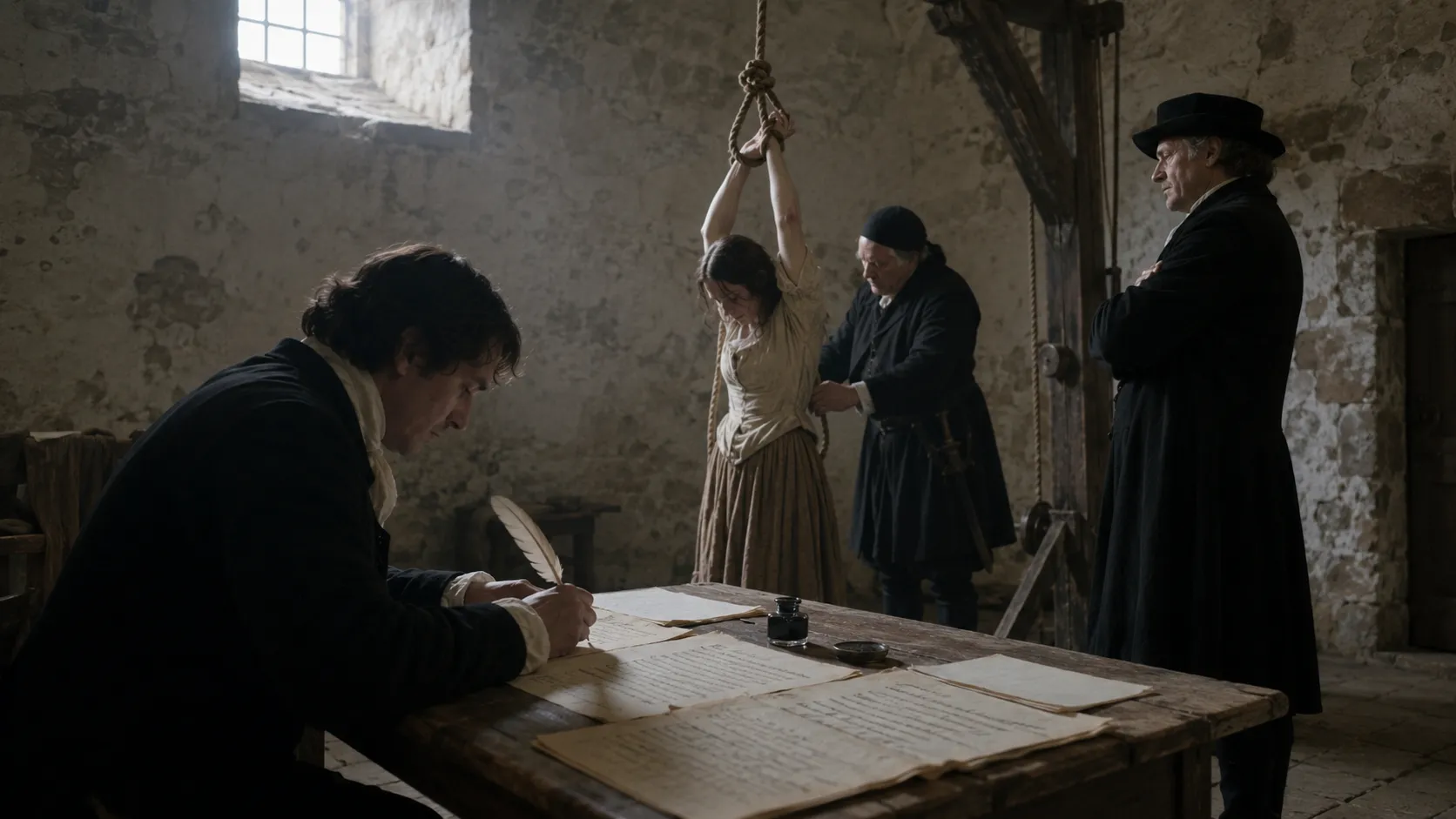
After conviction, Guernsey's court used torture to extract confessions from accused witches and the names of supposed accomplices.
Enjoying the Sark Journal? Get new Sark stories by email.
Old Guernsey court records use the phrase put to the question.
It meant torture.
In the witchcraft proceedings of 1617, torture came after conviction. The court wanted the condemned to disclose supposed accomplices before they were put to death.
The 1617 prosecutions continued after 4 July
Three people were executed on 4 July 1617.
Another four were executed on 8 August.
Two more were executed on 17 October.
The surviving chronology records torture before those later executions too.
There is an unresolved disagreement elsewhere in the research over the total number of 1617 trials and executions, so the dated events are more secure than a single summary tally.
Collette named Marie under torture
Collette du Mont was tortured. Her confession named her daughter Marie Becquet and said she had taken Marie to the Sabbath.
Marie was then put to the question in turn.
Her confession repeated the same kind of supernatural material: the Devil, black ointment, a Sabbath and sexual intercourse with the Devil.
What did ‘put to the question’ mean?
Guernsey used the strappado in judicial torture.
The condemned person’s hands were bound behind the back and the body was raised. The method could dislocate the shoulders and damage the thumbs.
A later description from 1682 names La Tour Beauregard in St Peter Port as the place where this procedure was carried out in Guernsey witchcraft cases.
That account was written 65 years after the 1617 proceedings. It describes a later seventeenth-century Guernsey procedure. It does not prove that Collette du Mont, Marie Becquet or Isabel Becquet were tortured at La Tour Beauregard in 1617.
The supernatural detail came after conviction
Before torture, the 1617 case centred on alleged harmful magic: sickness, dying animals, failed milk, curds that would not set, infestations and objects treated as charms.
After conviction and torture, the confessions expanded into black ointment, flight, the Sabbath, animal-shaped Devils, sex with the Devil, bread and wine and the Devil’s mark.
These details entered the record through coercive interrogation after the court had already decided guilt.
The confession was turned into a narrative
John Linwood Pitts, who published the Guernsey records in the nineteenth century, noticed unusual punctuation in the confession transcripts.
He believed the colons marked stages in an interrogation. The clerk then shaped the answers into the connected narratives later readers encounter.
Sark enters the same system in 1627
Rachel Alexandre of Little Sark was convicted of sorcery by Guernsey’s Royal Court in 1627.
Her surviving sentence ordered torture before execution in an attempt to make her reveal others.
The legal record is covered in Sark’s Witch Trials. The companion article Sex with the Devil examines what the 1617 confessions contained and when those details entered the record.
